+91 83742 09209
 konakalla.vamsi99@gmail.com
 [Clinic Address, City]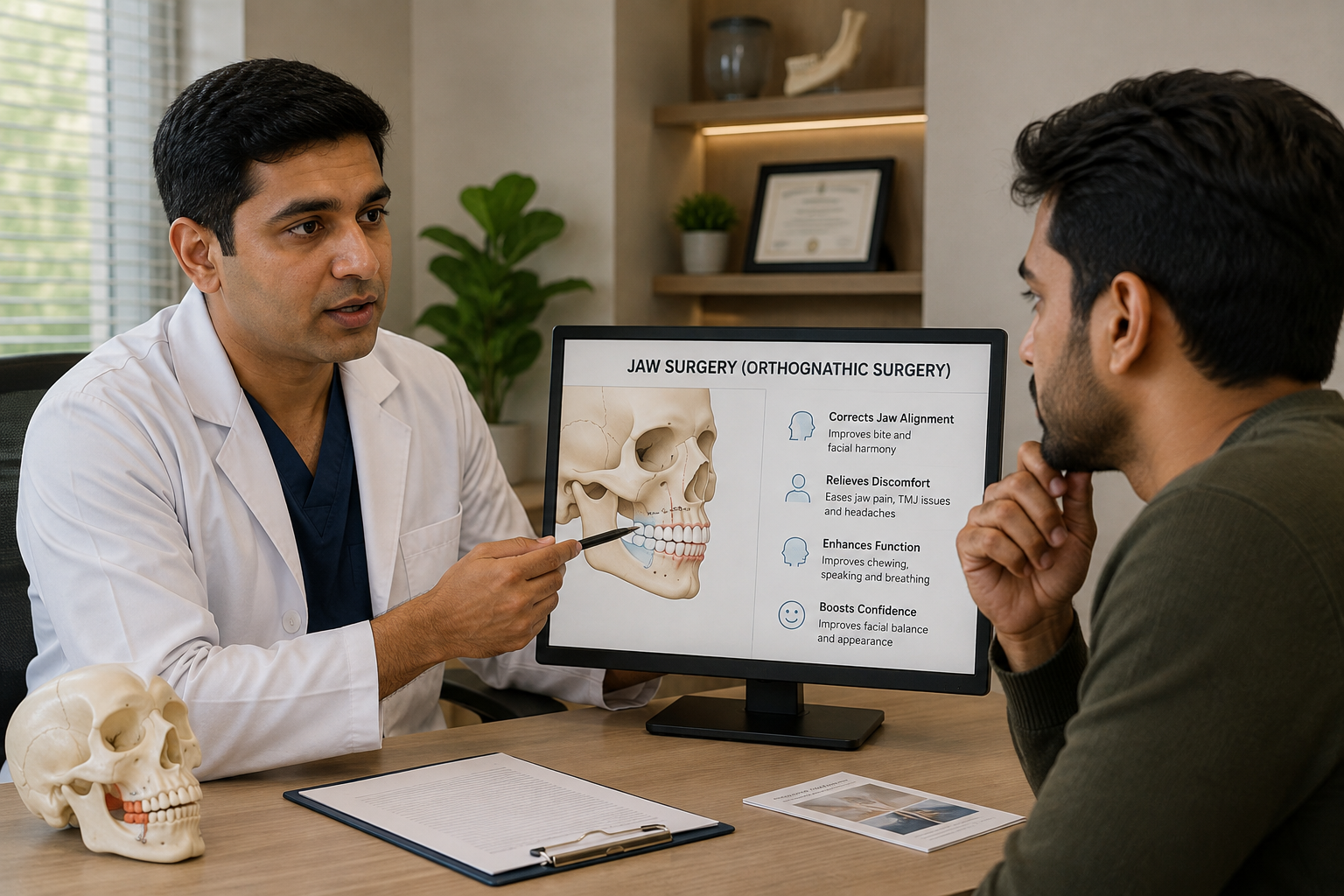
Orthognathic surgery, commonly known as corrective jaw surgery, is a specialized procedure performed to correct severe skeletal and dental irregularities. It is designed to reposition the upper jaw (maxilla), lower jaw (mandible), or both, to improve bite function, breathing, and facial balance.
Unlike minor orthodontic treatments, jaw surgery is recommended when the teeth do not align properly due to a mismatch in the size or position of the jawbones themselves. This can result in functional difficulties such as trouble chewing or swallowing, chronic jaw pain (TMD), speech impediments, or severe sleep apnea caused by an obstructed airway.
Corrective jaw surgery is a collaborative process. An orthodontist aligns the teeth with braces, and a maxillofacial surgeon repositions the jawbones to correct the bite permanently.
The surgery is performed entirely inside the mouth, leaving no visible external scars on the face. During the procedure, the surgeon makes incisions in the jawbones, aligns them into their correct functional positions, and secures them with tiny, biocompatible titanium plates and screws. These plates remain in place permanently, helping the bone heal in its new position.
Who is a candidate for jaw surgery?
Orthognathic surgery is usually considered after jaw growth is complete, typically around ages 16-18 for females and 18-21 for males. Candidates include those with:
- Severe underbites, overbites, or open bites that cannot be fully corrected with braces alone.
- Significant facial asymmetry or skeletal discrepancies affecting chewing or speech.
- Obstructive sleep apnea that does not respond to non-surgical treatments like CPAP.
- Chronic jaw joint pain accompanied by wear on the teeth and difficulty opening the mouth.
Jaw surgery requires detailed pre-surgical planning, orthodontic alignment, and a recovery phase of 4 to 6 weeks. It is a highly specialized procedure that can dramatically improve both quality of life and facial aesthetics. For a clinical evaluation, consult Dr. Vamsi Krishna Konakalla. This guide is for educational purposes and is not medical advice.
 Call Us :